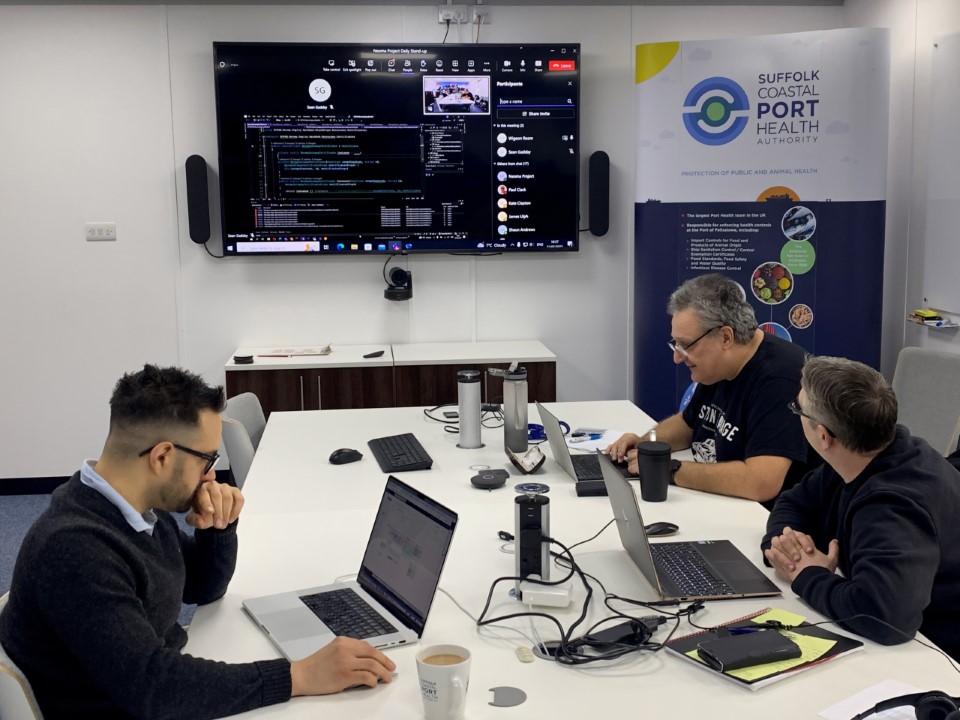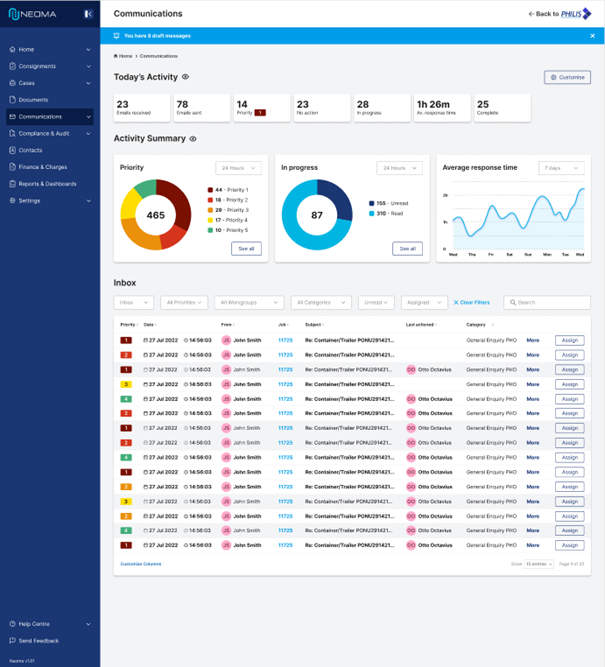
Welcome to our latest blog update, where we're excited to delve into the latest advancements within the NEOMA project. In this instalment, we'll be focusing on two pivotal aspects: debugging and SharePoint integration. As we navigate through the intricacies of software development and collaboration tools, we aim to provide you with insights into how these elements are shaping the NEOMA project's journey towards success.
AI goes to school
AI begins its life with limited knowledge and must learn from trial and error before becoming a master of its trade. This is known as 'machine learning'.
NEOMA's document categorisation is no different, and after a few weeks of handling live jobs, the project team has collated enough feedback from team members to put the AI through school.
Project Manager Adam Gould said:
AI requires continious refinement, direction and training, so the feedback we are receiving from team members is vital. If you would like to help, please consider filling out any errors you come across on the issue log.
Some documents, namely trailer documents, are particularly difficult to train the AI to catergorise due to inconsistent layouts and different languages. In the meantime, team members can manually recategorise documents as required.
Comms hub undergoes stress test
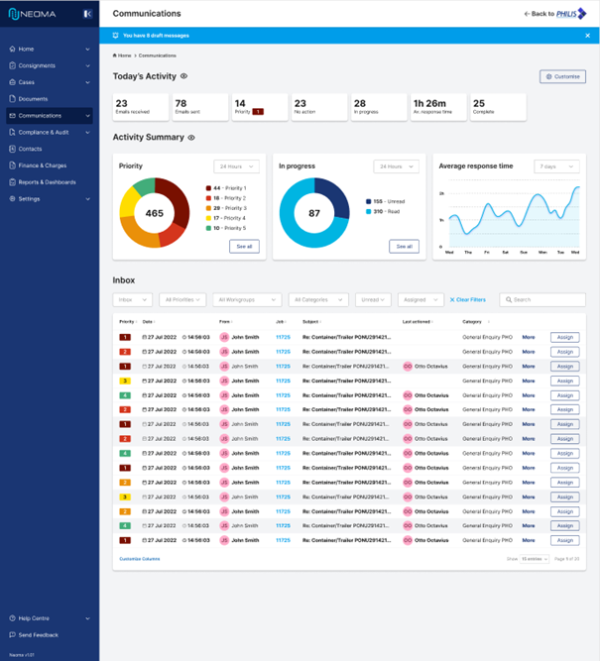
Developers Andy Robinson and Reece Myers have had their heads down working on NEOMA's next release, the communications hub, as they move from what the team calls the 'happy' part of the job to one of its biggest challenges.
That's because Andy and Reece are now running the module through worst-case scenarios, such as if agents were to ask for information on 50 consignments with minimal detail and see how the 'rules engine' handles it.
Adam explained:
"One of the biggest benefits of the communications hub's inbound module is NEOMA will detect and prioritise important emails instead of working from old to new. This should save team members a significant amount of time.
Our developers are working towards a successful end-to-end test of outbound communications by June, followed by User Acceptance Testing (UAT)."